Slightly above the Corpus Christi average
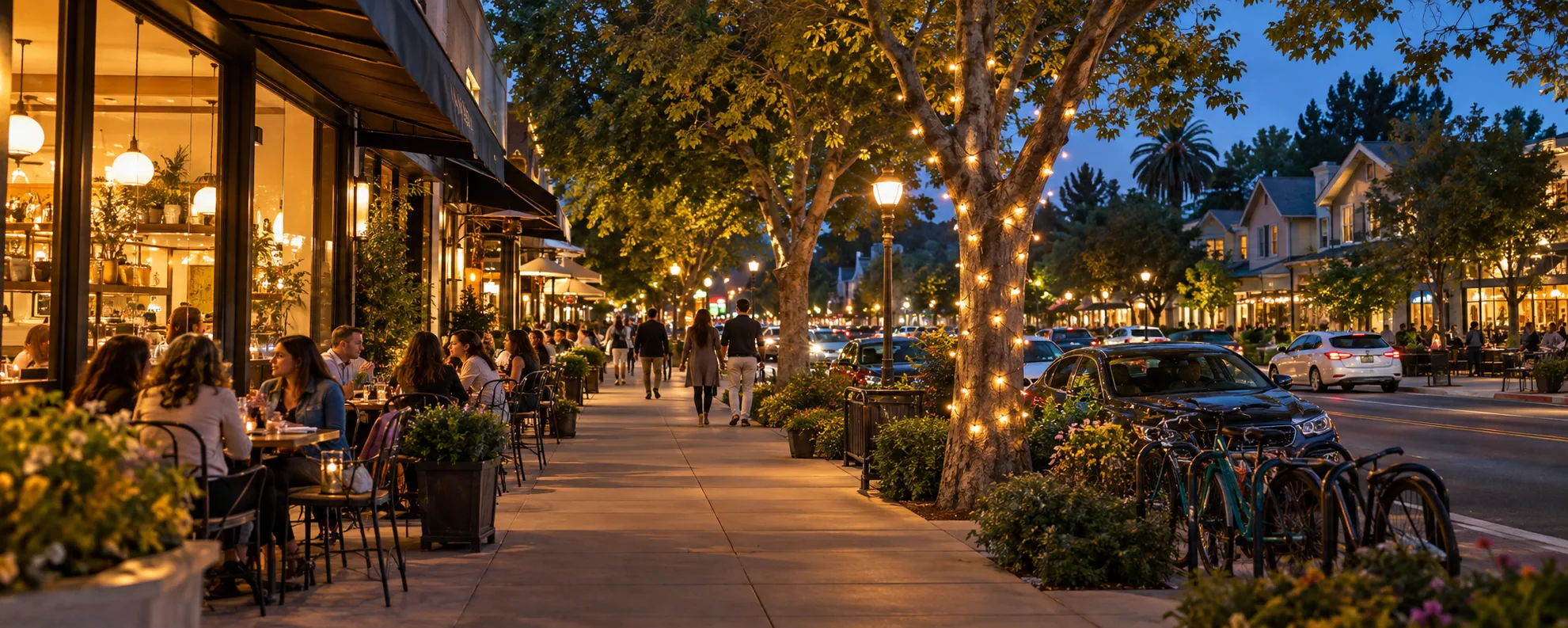
Bay Area, Corpus Christi
Updated
The Bay Area is a coastal neighborhood defined by its historic architecture and scenic proximity to the Gulf of Mexico. While the area features a structured grid with accessible sidewalks, residents primarily rely on vehicles for daily errands and commuting.

What’s life here really like?
A first look at Bay Area, Corpus Christi
Bay Area population: 40,104 residents
Near the Corpus Christi average
Slightly below the Corpus Christi average
See what’s around a specific address.
Explore the map with iHuus AI Guide. Ask about schools, noise, and the surroundings at an address, then compare places based on what matters to you.
By continuing, you agree to our Terms and Privacy Policy.
What to know about Bay Area, Corpus Christi
Life in Bay Area, Corpus Christi
The Bay Area neighborhood in Corpus Christi, Texas, is a historic waterfront community anchored by the scenic Ocean Drive, which dates back to 1904. Developed primarily between the 1930s and 1960s, the neighborhood is characterized by a rich stock of midcentury ranch homes, coastal cottages, and grand architectural estates. Notable landmarks along Ocean Drive include Watsonia, a unique 1938 Pueblo-influenced estate, and the 1930 Mediterranean-style Crook Estate, which features a rare Lord & Burnham greenhouse and a 1750 New Orleans iron fence. The neighborhood’s signature public space, Cole Park, originated from a six-acre donation by real estate developer E.B. Cole in the 1920s and was expanded by 20 acres in the 1960s through land reclamation and seawall construction.
The neighborhood maintains a dense suburban character, balancing established residential blocks with light commercial hubs. Residents benefit from a reliable layout of sidewalks and green verges, which support a moderate level of outdoor activity despite the prevalence of car-dependent retail centers. The area offers a high degree of flood safety and a stable mix of housing types, ranging from midcentury ranch homes to modern multi-family complexes. According to iHuus data, the environment is generally quiet, though the proximity to major roadways contributes to a baseline of traffic noise. Prospective residents should note that while the neighborhood provides essential services and local dining, most daily trips require a vehicle. The area is well-suited for those who value coastal access and established school options, including those in the Flour Bluff and Corpus Christi independent school districts. While the community is largely residential and free from heavy industrial hazards, the presence of specific infrastructure like local wastewater facilities is a factor in the broader landscape. Overall, it serves as a steady, quiet environment for those prioritizing a balance of coastal lifestyle and suburban convenience.
13 neighborhood qualities in Bay Area, Corpus Christi
Privacy Index
Residential spacing is consistent with the city average, offering a mix of shared apartment walls and standard suburban lot distances. Some areas feature dense clusters with closely spaced houses, while other sections provide more buffer between neighbors.
Ranked #6 in Corpus Christi, TXWalkability
Pedestrian access is better than the Corpus Christi average due to a consistent sidewalk network on many residential streets. While some high-traffic arterials and heavy tree canopy may obscure paths or complicate crossings, the area remains navigable for those on foot.
Ranked #2 in Corpus Christi, TXVisual Appeal
Larger homes and upscale amenities contribute to a visual landscape that is slightly more polished than the Corpus Christi average. While some areas feature standard mid-century tract housing, many properties offer spacious driveways and prominent residential features.
Ranked #3 in Corpus Christi, TXDog Friendliness
Wide green verges and accessible school athletic fields provide more public space for pet owners than the Corpus Christi average. According to iHuus data, several small neighborhood parks and continuous green corridors facilitate easy dog walking throughout the residential grid.
Ranked #1 in Corpus Christi, TXUrban-Rural Index
Residential layouts range from dense suburban developments to low-density areas featuring significant open green space. This landscape is slightly less developed than the Corpus Christi average, offering a blend of organized street networks and scattered open land.
Ranked #7 in Corpus Christi, TXNeighborhood Vibe
A predictable rhythm of residential life and essential services defines this area, offering slightly more activity than the Corpus Christi average. While some pockets are quiet and coastal, many sections provide reliable access to diverse dining and local amenities.
Ranked #2 in Corpus Christi, TXAcoustic Comfort
Frequent disturbances from nearby transit corridors, such as busy freeways or rail lines, characterize the acoustic environment. According to iHuus data, these noise levels are slightly higher than the average for Corpus Christi.
Ranked #6 in Corpus Christi, TXAir Quality
Frequent unhealthy air quality levels pose significant risks to sensitive groups. According to iHuus data, the air quality in this area is worse than the Corpus Christi average.
Ranked #6 in Corpus Christi, TXIndustrial Proximity
Residential and light commercial uses dominate the landscape, with almost no heavy industrial hazards or large warehouses visible. While a wastewater treatment facility exists in the northeast corner, the area remains notably clearer of industrial activity than the Corpus Christi average, according to iHuus data.
Ranked #3 in Corpus Christi, TXHealth Insurance Coverage
Health insurance access is slightly above the Corpus Christi average. According to iHuus data, a portion of the population remains uninsured.
Ranked #4 in Corpus Christi, TXIdeological Lean
Political perspectives in this area are evenly distributed between conservative and liberal leanings, mirroring the broader political landscape of Corpus Christi.
Ranked #2 in Corpus Christi, TXPopulation Age Profile
Residents will find a balanced demographic spread consisting of young adults, families, and seniors. This age distribution is very similar to the overall average found across Corpus Christi.
Ranked #3 in Corpus Christi, TXFlood Safety
Flood risk in this area is relatively low and stays above the Corpus Christi average, though some residual risk remains within the 500-year floodplain according to iHuus data.
Ranked #1 in Corpus Christi, TX61 school reports serving Bay Area, Corpus Christi
Flour Bluff Independent School District
District rating: 7/10District grades K–12
Flour Bluff Independent School District is a stable, high-performing organization with strong community backing and an impressive extracurricular pedigree. It maintains solid academic standing, particularly in its upper-level feeder schools, and is currently undergoing a significant facilities modernization phase funded by a recent bond measure. While the district faces typical regional challenges such as a slight enrollment decline and moderate performance at the elementary level, its financial transparency, prestigious NJROTC program, and consistent athletic dominance solidify its status as a top-tier educational entity in the Corpus Christi area.
Corpus Christi Independent School District
District rating: 5/10District grades K–12
Corpus Christi ISD is a stable but transitioning district characterized by exceptional financial stewardship and a tier of high-performing specialty schools that contrast with lower-performing neighborhood campuses. While it holds a consistent 'Superior' financial rating and enjoys strong community partnerships, the district is currently navigating the difficult process of consolidating seven schools in response to declining enrollment. Proficiency levels in core subjects trail state averages, leading to new academic initiatives like the Cambridge Math program. Overall, the district remains a solid choice for specialty education, but it faces operational headwinds as it rightsizes its infrastructure and seeks to bridge the achievement gap across its 50+ campuses.
- Zavala El
- Club Estates
- Student Support CenterNot rated
- Coles H S And Educational Center
- Allen El
- Baker Middle
- Browne Middle
- Hicks El
- Cunningham Middle At South Park
- Driscoll Middle
- Garcia El
- Haas Middle
- Hamlin Middle
- Houston El
- Kostoryz El
- Martin Middle
- Cullen Place El
- Menger El
- Moody H S
- Oak Park Special Emphasis School
- Calk-Wilson El
- Kaffie Middle
- Moore El
- Dawson El
- Windsor Park G/T
- Yeager El
- Barnes El
- Carroll H S
- Mary Helen Berlanga El
- Wynn Seale Metropolitan School Of Design
- Fannin El
- Gibson El
- King H S
- Los Encinos Ses
- Shaw Ses
- Roy Miller H S And Metro School Of Design
- Ray H S
- Sanders El
- Schanen Estates El
- Smith El
- Travis El
- Early Childhood Development Ctr
- Collegiate H S
- Harold T Branch Academy For Career & Technical Ed
- Adkins Middle
- Grant Middle
- Galvan El
- Jones El
- Nueces Co J J A E PNot rated
- Mireles El
- Faye Webb El
- Kolda El
- Veterans Memorial H S
- Creekside El
District membership does not confirm an address’s enrollment eligibility. Verify with the district.
6 neighborhoods near Bay Area, Corpus Christi
Questions about Bay Area, Corpus Christi
Is the Bay Area neighborhood considered walkable?
The neighborhood features a consistent grid of sidewalks that makes walking possible, but the prevalence of high-traffic arterials and large parking lots means that most residents rely on cars for daily errands and shopping.
What school districts serve the Bay Area neighborhood?
The area is served by both the Flour Bluff Independent School District and the Corpus Christi Independent School District. Both districts offer a range of educational options, including high-performing specialty schools and modernized facilities.
How noisy is the Bay Area neighborhood?
The neighborhood experiences a moderate level of noise, primarily driven by road traffic. While many residential blocks remain quiet, the proximity to major thoroughfares contributes to an average sound level of approximately 60 decibels.
 Street networks · local places